Showing posts with label Food Around the World. Show all posts

Sunday, March 4, 2012

Food at the Oscars and Wolfgang Puck's Governors Ball

It was a once in a lifetime kind of occasion, that's for sure.  Unfortunately, it was a once in a lifetime occasion where cameras were prohibited.  I did however, have my phone with me, and managed to covertly snap a couple of not so excellent photos.  The light was dim throughout, so unfortunately I have not done any justice to the wonderful food.

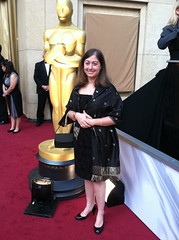
Enjoying the red carpet
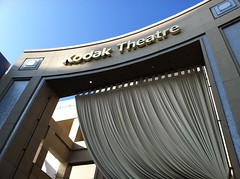
No longer the Kodak Theatre, but not enough time to change to it's new name before the ceremony day


Let me start by describing the ceremony itself.  All of us guests entered via the red carpet.  The only thing dividing us regular folk from the stars was a rope.  There was a lot of screaming from the grandstands when big stars entered, lots of networks doing interviews, and of course, lots of paparazzi.  The red carpet into the former Kodak Theater was pretty long, giving us a lot of time to soak in the atmosphere.  Upon ascending the sparkling staircase into the lobby of the theater, we were offered champagne.  There was champagne, more champagne, and seemingly more champagne, and yet interestingly a void of all other drinks, even water.

Ready to kick off the 2012 Oscars


After two hours of perusing the red carpet, brushing elbows with various celebrities, and enjoying the general hubbub of the paparazzi, we entered the theater and took our dress circle seats.  The show was run with ease and the atmosphere was generally relaxed - minus the few people always running back to their seats when the production announcer said, "Less than 30 seconds to air, ladies and gentleman PPPLLEEAASSEE take your seats!" 
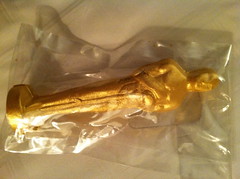
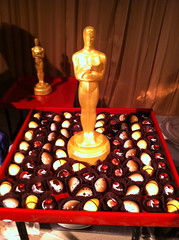
Empty popcorn box from the ceremony and gold chocolate Oscar

About 2/3's of the way through the show they came around with little containers of popcorn.  Cute idea, but would have been nice if we would have also been offered some water!  Nevertheless it was a welcome treat after not having had anything to eat for hours.

The moment the show was over, everyone jumped out of their seats to either exit, or, if they were lucky enough to have a ticket, enter directly into the Governors Ball.  I was excited to attend the Governors Ball because my favorite kind of celebrity, the famous chef, Wolfgang Puck, was catering the party.

The Governors Ball


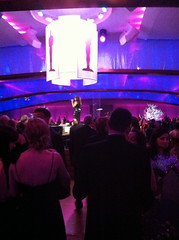
It turns out, that I didn't even get to sample all of the huge variety of items on offer.  Mini-dinner plates were served to us like appetizers.  There was lots of caviar, and lots of truffle flavored items.  There was comfort food (like chicken pot pie) and luxurious lobster.  There were adorable plates of beautifully presented mixed mini appetizers - mini potato latkes, crostini with prosciutto, miniature one-bite tacos and super tiny baby vegetables.  Baked potatoes were wrapped in gold foil and topped with mounds of sour cream and caviar.  Single racks of lamb were served with a delicate mint sauce and pea puree.  There were short ribs, pot stickers, sliders, and smoked salmon pizza too.  In the back of the room, there was a chocolate lovers dream; chocolate fountains, truffles, cookies etc.  And in the middle of the room, there was a giant, revolving band, led by Tony Bennett belting his heart out.

The thing that fascinated me most was how this event was made feasible.  Somehow, Wolfgang Puck managed to serve every dish warm to each of the 1500 guests.  To top that off, the food kept on coming, round after round, and hour after hour.  I'd loved to have viewed the behind the scenes kitchen to see they were operationally managing to make all this magic happen! 

One small section of the chocolate fountain bar
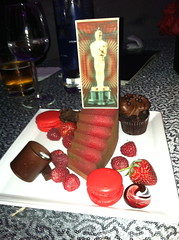
Passed mini-dessert plates, mini chocolate strobe light (on the left) included
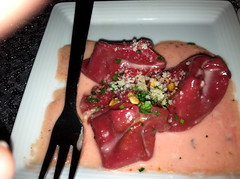
Red beet pasta, delicious!
Mac and Cheese topped with a giant piece of truffle


Memorable; yes.  Exciting; yes.  Once in a lifetime; yes.  Cross it off the bucket list; yes!

My apologies again for the terrible photo quality!!! I defer you all to Google Images (search: food at the Governors Ball) to see some really fantastic photos. 


Monday, July 13, 2009

Eating/Food on Mount Everest and in the Khumbu

The one and only Mount Everest:
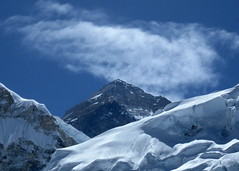

When I was young, adventure sports companies went through a phase where they thought, if you (as the climber) spent enough money, they could get you to the summit of the world's tallest mountain, Mount Everest (29,029ft). My Mom used to tease my Dad and say that she wanted to go. Unfortunately, in the late 90's, there were many deaths on Everest and the mountain returned to being a feat that only the most experienced and fit mountaineers could accomplish. Still, many climbers returned without standing on the top of the world due to altitude sickness, frostbite, or unforeseen circumstances such as weather.

After summiting Kilimanjaro in April of 2008, I added Everest Base Camp to my "bucket list." I actually wanted/still want to go to ABC (Advanced Base Camp) on the Tibet side of the mountain, but China closed Everest to climbers until the very last minute in 2009. So, after some encouragement on my behalf, I convinced my Mom to sign us both up for a Nepal Side Everest Base Camp Trek with the famous mountaineering company, International Mountain Guides (IMG).

Mount Everest Base Camp with the Khumbu Icefall in the background:


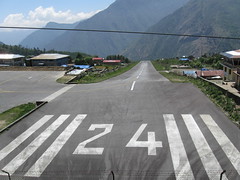
It was a long and strenuous 18 days to say the least. We faced everything from landing on the shortest runway in the world (thank you Agni Air who got us back and forth safely from Kathmandu to Lukla!) to diving off the trail to avoid killer Yaks. But those stories are all meant for a different kind of blog! I'm here to tell you about the food experiences I encountered during my trip.

The runway at Lukla (the end of the runway is a cliff!):

During the trek to Base Camp there are two options; camp in tents or stay in tea lodges. Our group of 10 took the tea lodge route, and this meant eating food prepared in the tea lodges. Food at the tea lodges is, well, very repetitive, and, almost all simple carbohydrates. Think pasta, rice and potatoes... and potatoes and more potatoes. Unfortunately, at the high altitude, potatoes are one of the only things that will grow well. Fruit is almost non existent, vegetables are scant, and the meat is scarce because of the superstitions of the Sherpa people and lack of refrigeration. The higher one climbs, the less variety there is. In hindsight, I would have brought plenty of dried fruit, canned fish and beef jerky to aid my diet on the trip. For protein, try some Nak cheese (a Nak is a female Yak, and the cheese is definitely not properly pasteurized), or try the traditional dahl bhat (lentils and rice). If you order dahl bhat and you like spicy food, you might want to ask for it spicy, because for some reason they make food unusually bland for the tourists.

The other thing I should mention about a trek through this region of the world is that water is not readily available, and a lot of the time you have to pay for it. Bring iodine tablets or a water purification system, and don't expect there to be extra water to brush your teeth or wash your face. It is extremely important to drink plenty of fluids each day at high altitude so don't skimp on the purchase of what you need to stay healthy. Finally, be wary of bottled water; it's better to treat everything and be safe rather than sorry in a place where there is not a doctor around every corner (or a toilet for that matter!).

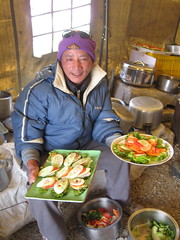
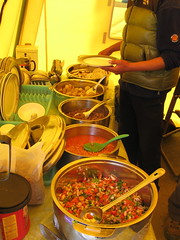
On a very windy but sunny morning, I made it to base camp. I was thankful to see the IMG village of tents and meet Eric Simonson and Ang Jangbu Sherpa, the principals of the 2009 IMG Evesest Expedition, who quickly offered me some warm Tang and a nice warm tent to sit in. It was about 11am when I reached base camp, which meant lunch was being readied. I immediately asked if I could see the cook tent. The Sherpas in the cook tent welcomed me in and let me take some photos. They were making potatoes, simmering meat, heating up baked beans, making chapathis, and putting together fresh vegetables for a salsa and for salad! Fresh vegetables?! I was so excited, and was told that they were washed specially for us foreigners (I wouldn't have dared touched anything uncooked at a tea lodge or in Kathmandu).

Making salad... a very exciting site after two weeks sans vegetables:

Cooking potatoes:


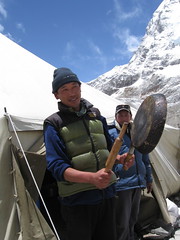
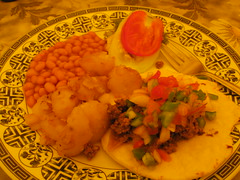
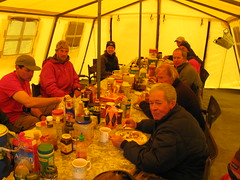
At 12pm, I got to see the call to lunch, and was escorted into a tent with the Everest climbers (imagine me and a bunch of hunky guys in a tent eating lunch!). There were so many different kinds of condiments on the table, from all over the world. They served my plate, and I proceeded to dump about half a cup of Pace salsa onto my "taco" which consisted of meat and chopped veggies inside a chapathi. It tasted AMAZING. I had seconds. It was incredible food after what we had been eating for the previous two weeks. I truly enjoyed it. I guess when you pay for an Everest climb (somewhere around 70,000 US Dollars) they make the effort to get some really good food to you.

The call to lunch:

The fabulous lunch spread:


My lunch plate at Base Camp:

A sampling of the condiments available to the climbers:


While I was eating lunch with the climbers, I got to chat them up and ask them about their experiences. I'll tell you what they said about the food. Meals were served at 9,12, and 6 (afternoon tea at 3 too). If you were heading out of base camp and upwards through the Khumbu Icefall, they'd have your breakfast ready for you at the appropriate time (as early as 3am). While traveling up through Camps 1,2,3 and 4, the food availability varied. At the lower camps, IMG had rotating cooks who would make food for the climbers. When climbers were otherwise hungry or at the higher camps, they would bring many snacks and dehydrated meals with them. At base camp, thousands of eggs were consumed by IMG climbers (I think when I was there, which was before their summit bids, they had already consumed more than 5,000 eggs). And I found it amusing that the most common meat that they ate was SPAM in different forms.

Lunch with the climbers:

I also visited the IMG Stupa, where they have a big Puja before climbing starts, and give offerings to the mountain goddess. Many kinds of little offerings are given - little bits of food for example - all to ask the mountain goddess for safe passage. It was really very beautiful; prayer flags reached from the Stupa to all corners of IMG's camp.

The IMG Stupa:


Trekking in the Himalayas is really a unique experience. Trying to eat well is just as much of a job as putting one foot in front of the other on the way up a hill at high altitude. When trekkers and climbers get back from their trips, they acquire something called, "Climbers Amnesia." One acquires this amnesia when they realize what an awesome thing they accomplished and totally forget about all the hardships they faced. Mom and I definitely have "Climbers Amnesia," and will never forget about our adventure in the mountains of Nepal. The question for us is, what adventure is next?
Thursday, July 2, 2009

Eating in West Africa: Senegalese Style


A couple of years ago I went to Dakar, Senegal. I was fortunate enough to be able to learn about their food, how they cook some of their classic dishes, and the way they eat. The Senegalese people are very generous; if you are visiting someone at meal time, they will always share what they are having with you. Even walking past people on the street, you will often hear them exlaim, "Kaay leck!" which means "come and eat!" in the local language.

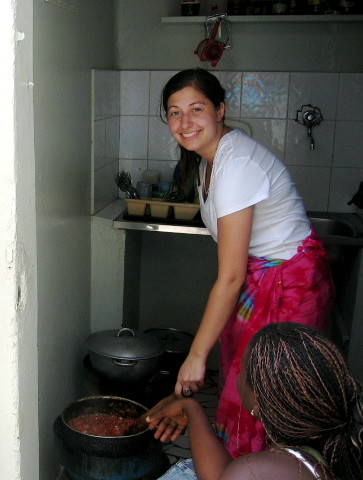
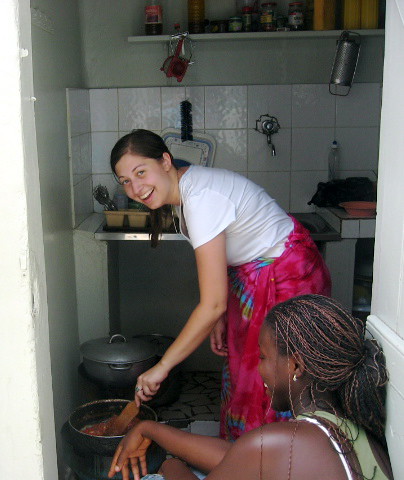
Under some expert supervision, I was able to help cook the Senegalese national dish, Thiéboudienne (pronounced Cheh Bu Jen). Thiéboudienne is a rice and vegetable dish, topped off with a delicately marinated grilled fish.


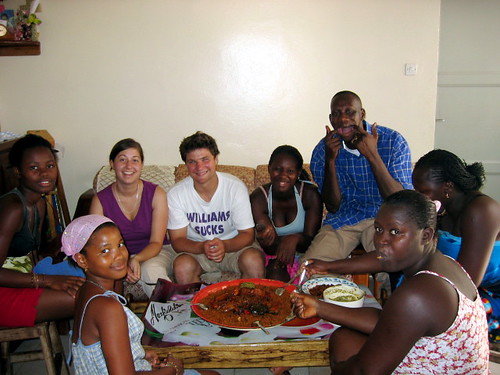
In Senegal, everyone gathers around a huge shallow-rimmed bowl to eat. The head of the house will break up the main item (in this case the fish), and place it in each person's section of the plate. Everyone eats out of this one plate, either with the right hand (never the left!) or with a spoon.


People typically eat quickly, with minimal conversation. They have a saying that translates roughly into "You only have one mouth, it cannot do two things at once." Conversation typically occurs both before and after the meal, often during an elaborate tea ceremony. This ceremony involves three cups of highly caffeinated tea, with each cup containing more sugar than the last. One Senegalese man prepares the tea by pouring it back and forth between two glasses to create a thick foam cover. This cover protects the tea from sand and dust. Each person drinks using one of these two glasses, refilling each time. Once everyone has had a taste, they begin brewing the next one!


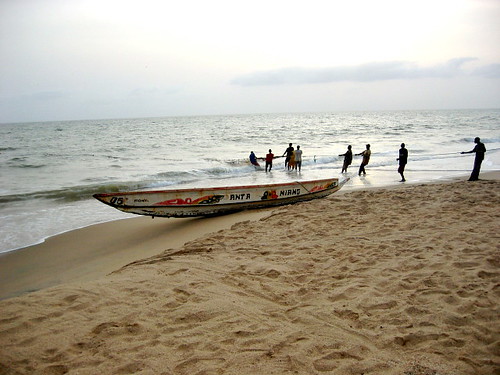
I also went to a small ocean resort about an hour and a half south of Dakar. I was fortunate enough to observe the local village-men fishing. Their fishing method was simple; they take a boat out into the water, drop a net, and then pull it in from both sides.


They caught everything from sea snakes to a huge ray, as well as the average fish (of which I bought one and took it to the hotel for them to cook up for my dinner!).

Monday, June 29, 2009

Istanbul: The Spice Market, and Two Restaurant Recommendations


I had the opportunity to travel to Turkey this spring with one of my best friends, Lauren, and her mom. They really showed me a great time, and it's a trip I won't forget.


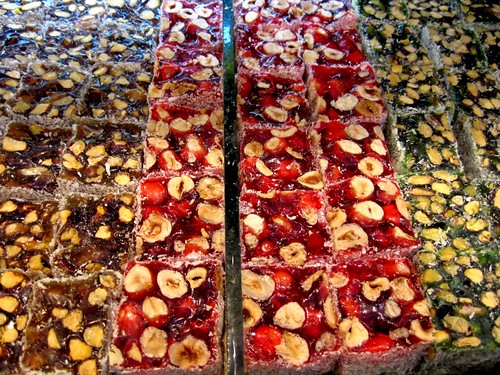
(mmm Turkish Delight!)

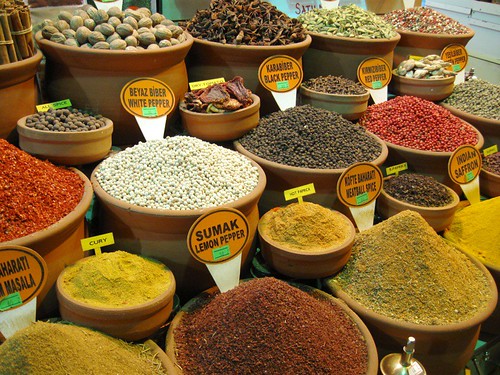
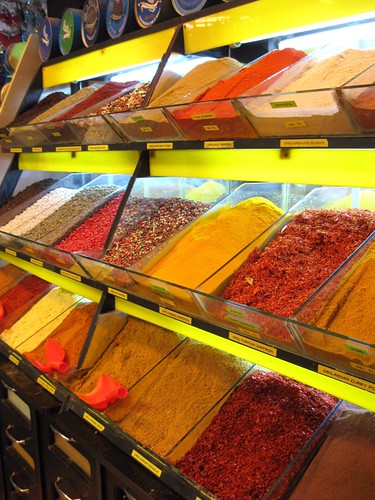
While we were in Istanbul, we stopped in the spice market. It's definitely worth visiting the spice market. There are all kinds of Turkish sweets, spices from Turkey and all over the world, and of course, Turkish specialties like baklava and pastrami. Please enjoy some of the photos I took a little farther down in this post.


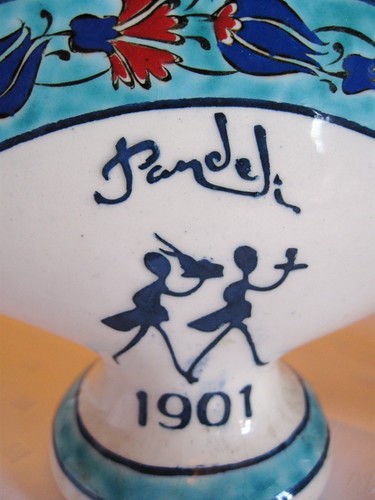
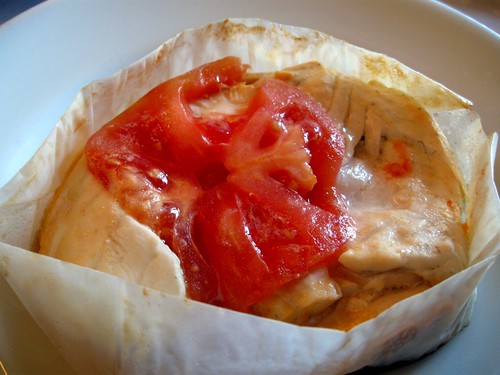
Above the spice market is a famous restaurant named Pandeli. A couple of people had recommended it to me before my trip, so Lauren, her mom and I made sure to make Pandeli our lunch stop that day. Pandeli is most famous for it's sea bass en papillote (sea bass cooked in a parcel, photo below). That's what I had, and it was truly delicious.


I must mention one other restaurant I went to in Istanbul; Balikci Sabahattin. This restaurant is a seafood place, and every single thing we had there was excellent. Unfortunately I didn't take any photos, but it would be the first restaurant I would head to if I was back for another visit to Istanbul.

Please enjoy the photos of the market; it was a lot of fun to visit, and a great place to pick up some Turkish Delight to bring home to friends and family!

Turkish Delight and other tasty treats...


Lots of spices...


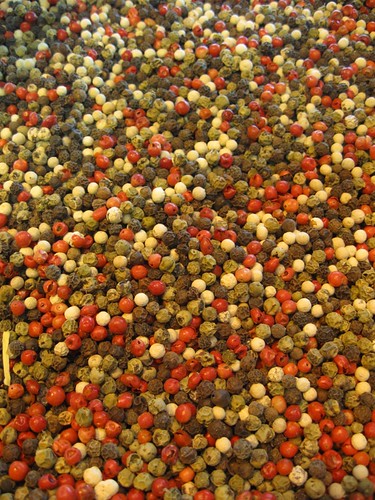
Peppercorns...


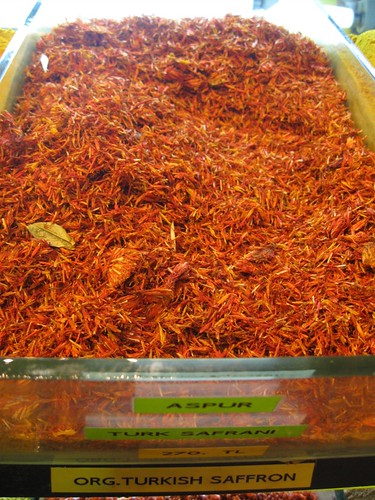
Turkish Saffron...


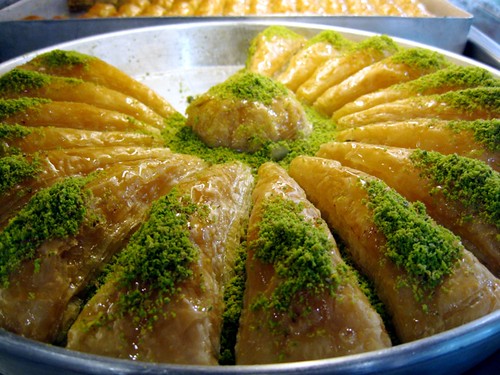
Baklava...


Something else that looked tasty but I don't know the name of...


Dried vegetables including dried aubergine (eggplant) which I had never seen before...


A huge wheel of goat's cheese...


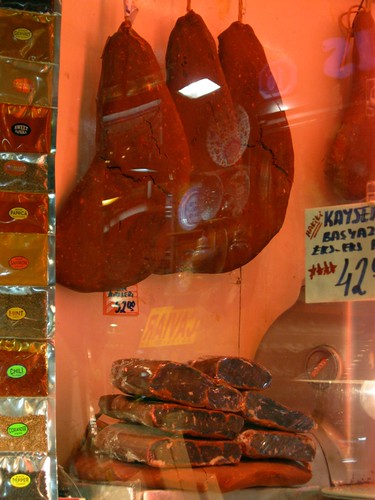
Pastrami, which was more cured and more spicy (but less peppery) than the American version...


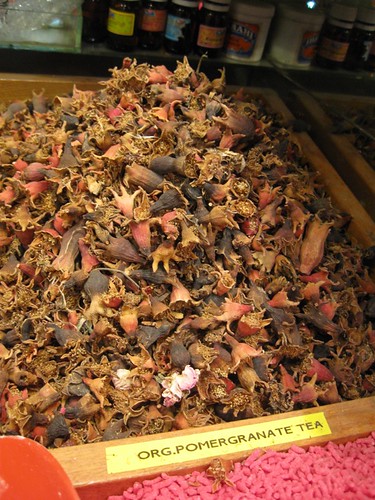
Finally, pomegranate tea... so pretty!

Sunday, February 22, 2009

Did you Know? The Difference Between Croissant Shapes


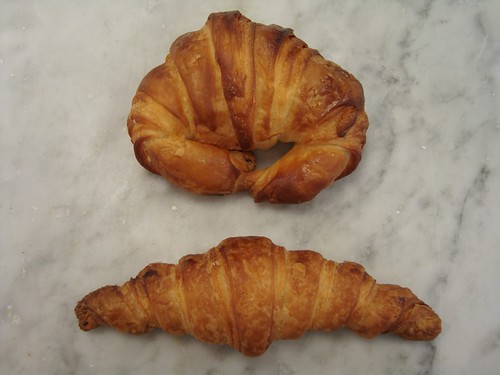
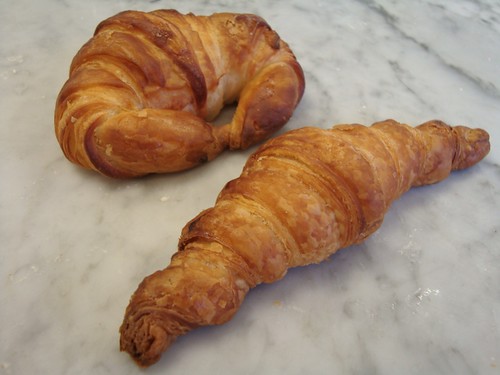
Some plain croissants are straight, and some are joined together at the ends in a sort of crescent moon shape. I never knew that this actually meant something. I thought the shape of the croissant was simply the preference of the person who had shaped them.

What I learned recently is that the shape of the croissant - straight across or crescent moon, reflects the ingredients inside... in France at least. In France, it is the law, that only a croissant made with pure butter can be straight. If a croissant is made with any other sort of fat, for example, margarine, it must be joined at the ends to form a crescent moon shape.

The next time you buy a croissant, you might be a little more inquisitive about what it's made of...

Sunday, November 16, 2008

Eating Like a King or Queen; Traditional United Arab Emirates Style


I recently went to the United Arab Emirates (UAE) and visited the specific Emirates of Dubai, Abu Dhabi and Sharjah. It was my first time in the Middle East and a very interesting experience. Not to mention I dined extremely well in the many restaurants available to us foreigners.

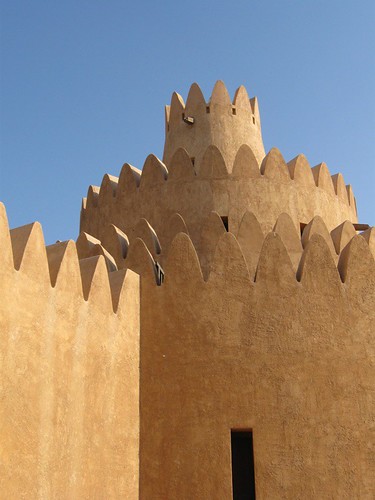
However, what I really enjoyed was visiting some of the historical places in and around the UAE. I learned a bit about how the Arabs used to live, what their homes were like, and how they used to eat.

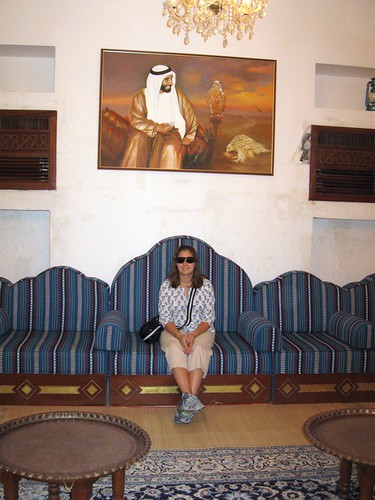
I took some photos at the Al Ain Palace Museum, the formal home of the late Sheikh Zayed bin Sultan Al Nahyan. Men and women had separate areas in the palace to live, hang out, and eat. Traditionally, people would sit on the floors of rooms on pillows. However, as you can see below, the Sheikh had seats. I'm sitting on his "throne" in this photo.


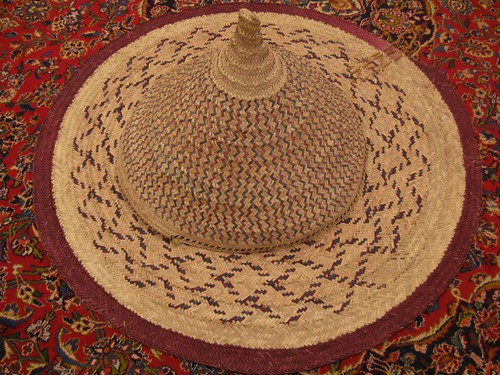
In the middle of the room, there would be mats with large woven cones sitting on top. Food would be served on these mats in large dishes. Eating was communal, and it was (and still is) very important to eat with your right hand. The cones protected the food underneath from insects.


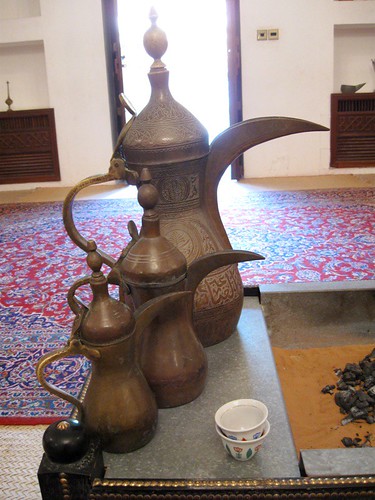
The coffee pot is one of the national symbols of the UAE. If you are a guest entering a home, you will always be offered coffee. If you take a look at the coinage of the UAE, the dirham, you'll notice a coffee pot on it.


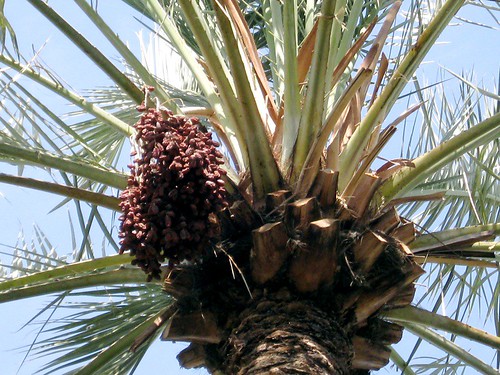
Lastly, I just wanted to show you a date palm. I had never really thought about it, and didn't realize that dates grew on huge palms. They ripen and dry naturally on the trees, and are ready to eat as soon as they have been picked. Yum!