Showing posts with label Vegan Friendly Recipes. Show all posts

Thursday, July 23, 2015

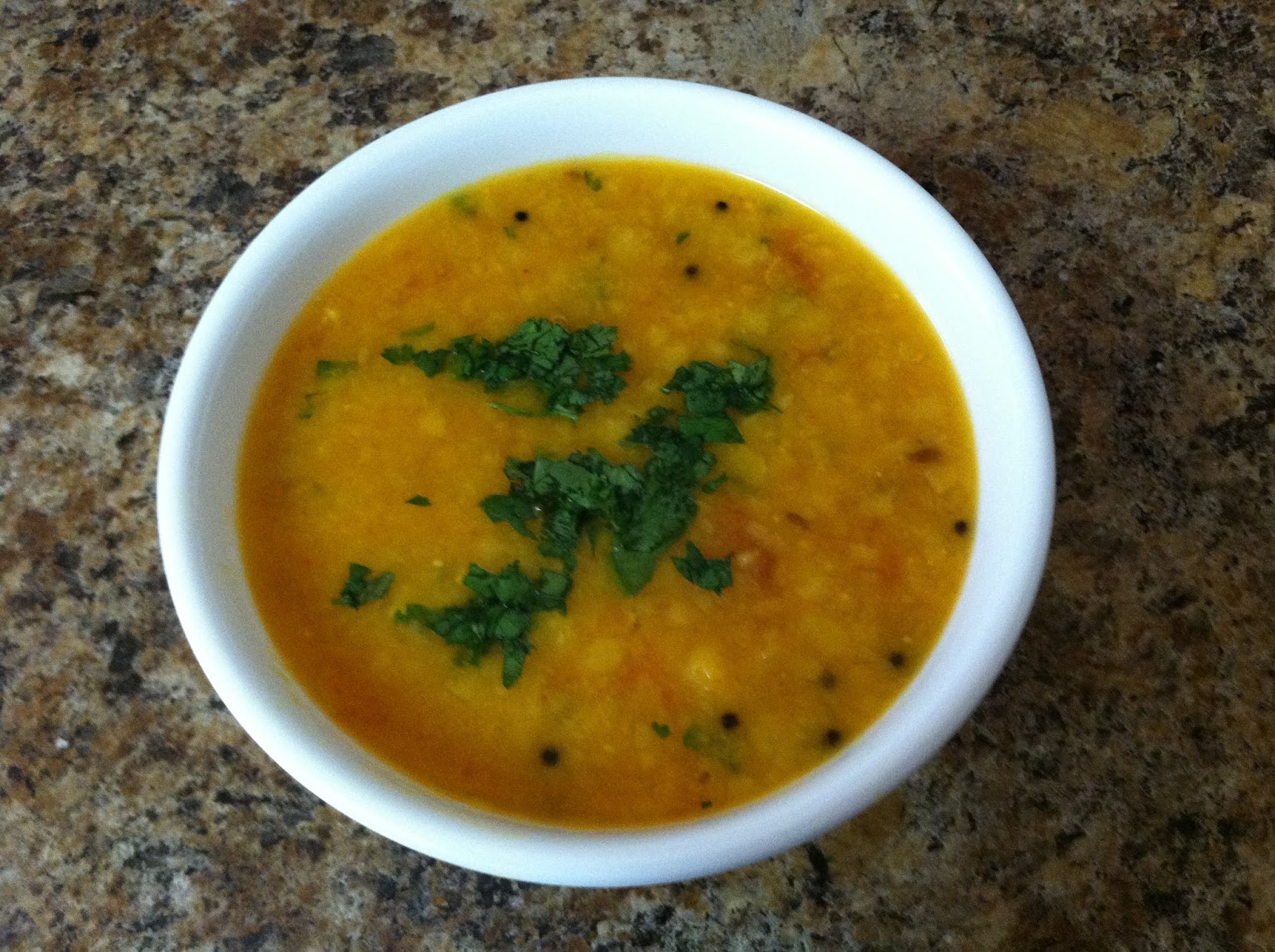
Classic Toor Dal - Everyday Indian Food

Lately, I've had quite a few people asking me for "Indian lentil recipes."  So I thought I'd write up our staple dal recipe that we eat at least once every few weeks.  Toor dal is Marathi for pigeon pea, a lovely member of the legume family.  The variety we make is yellow in color.  There are some things that I always love and never get sick of, and one of them is this recipe.  It's kind of like the American equivalent to mac and cheese, or the British equivalent to a jacket potato - comfort food all the way. 

Toor Dal
Makes 8 servings

Ingredients
2 cups thoroughly washed toor dal
3/4 tsp turmeric powder
1/2 tsp cayenne powder
1 tbsp canola oil, vegetable oil or ghee (clarified butter)
3/4 tsp mustard seeds
1/2 tsp cumin seeds
Pinch hing (asafoetida)
6 garlic cloves, thinly sliced
1 tsp salt
6 plum tomatoes, peeled and diced
5 cups of water
Juice of 1 lime or lemon
1 handful of cilantro leaves, finely chopped

Directions - Indian style pressure cooker 
*Please only use this method if your pressure cooker is safe to use to cook beans/lentils/legumes.  Check your pressure cooker instruction manual for guidelines. 
1.  Soak toor dal in 5 cups of water for a few hours.  This step is not essential but it speeds up cooking times dramatically.
2.  Heat oil in the pressure cooker.
3.  Add mustard seeds and listen for them to start popping.  Then add cumin seeds and the pinch of hing.  Allow these spices to sizzle in the oil for a moment until they smell aromatic.
4.  Add the garlic.  Stir, allowing to cook without browning for 1 minute.
5.  Add tomatoes, turmeric powder, cayenne powder and salt.  Allow this entire mixture to cook for a few minutes, stirring occasionally, until tomatoes look slightly softened.
6.  Add the toor dal and all the water; stir.  Close the pressure cooker lid.  On a medium heat, cook and listen for 3 whistles.  Turn off. 
7.  Once the pressure has subsided, open lid, and add citrus juice and cilantro.  Taste for salt and sourness, which can be adjusted by adding more salt and more citrus. 

Directions - without pressure cooker
1.  Soak toor dal in 5 cups of water for a few hours.  This step is not essential but it speeds up cooking times dramatically.
2.  Combine toor dal, water, cayenne powder, turmeric powder and salt in a pot and bring to a boil.  Skim the froth that has risen to the top.  Allow to simmer, stirring occasionally until toor dal is cooked.  During cooking, add water if necessary.  Do not cover the pot at any point.  Giving an estimate on time is difficult as toor dal can vary based on the variety/where it was grown etc.  It will probably take somewhere between 45 minutes and 2 hours.  When it is cooked, it will break apart, taking on a more creamy texture, and each piece can be very easily crushed with the back of a spoon.
3.  In a separate small pan, heat the oil.  
3.  Add mustard seeds and listen for them to start popping.  Then add cumin seeds and the pinch of hing.  Allow these spices to sizzle in the oil for a moment until they smell aromatic.
4.  Add the garlic.  Stir, allowing to cook without browning for 1 minute.
5.  Add tomatoes, turmeric powder, cayenne powder and salt.  Allow this entire mixture to cook for a few minutes, stirring occasionally. 
6.  Add this entire mixture to the pot with the dal in it, along with the citrus juice and cilantro.  Taste for salt and sourness, and adjust if necessary.
Wednesday, June 3, 2015

Cauliflower Bhaji/Indian Style Cauliflower and Potato


This recipe is delicious.  It was given to me by an excellent cook that I regard highly.  If you want to re-create the Indian restaurant experience in your own home, give this recipe a try.  It does not disappoint.  Keep in mind, if you are using a large cauliflower, you'll need to up the amount of each spice slightly. 

Cauliflower Bhaji
Makes 4 side dish sized servings

Ingredients
 
One small head of cauliflower, about 1.5 quarts, chopped into even, bite-sized pieces
One medium sized potato, peeled, cooked and chopped into small chunks
1 tbsp canola oil
A pinch of asafoetida (hing)
1/4 tsp turmeric
1/2 tsp cumin seeds
1/2 tsp coriander powder
1/4 tsp cayenne powder (or to taste)
1/2 tsp amchoor
1/8 tsp garam masala
1/2 tsp salt
A small handful cilantro leaves, finely chopped

Directions

1.  Cook the cauliflower pieces.  This can be done by steaming, boiling, or microwaving.  I'm usually in a rush and often end up microwaving as it only takes about 3-4 minutes to cook the pieces.  The ideal "cooked" cauliflower piece is tender but still has a bite to it.   Play around with this to get it right - it will depend on different factors, for example, how powerful the microwave is, or how large or small one considers "bite-sized" to be.
2.  Heat the oil in a wide bottomed pan.  Add the cumin seeds and allow them to sizzle and become aromatic.  Add the turmeric and asafoetida. 
3.  Immediately add the cooked cauilflower pieces and cooked potato chunks.  Stir until spices evenly cover cauliflower and potato.
4.  Sprinkle evenly over the mixture - coriander powder, cayenne powder, amchoor, garam masala and salt.  Stir thoroughly over the heat until well combined.
5.  Add the cilantro and stir until evenly distributed.  Serve!

Saturday, March 28, 2015

Sabudana Khichdi - Indian Style Tapioca with Peanuts and Potatoes


This recipe is a lovely mix of flavors and textures.  There is the chewiness of the tapioca, the bite of the crunchy peanut pieces, the softness of the fluffy potato chunks, and the tangy and spicy flavors which surprisingly combine so well with the peanut taste.  This dish would normally be served for breakfast or as a snack in India.  Healthy - not so much.  It's a carbohydrate festival with a bit of protein from some peanuts.  Tasty and awesome as a treat - yes. 

Sabudana Khichdi
Makes 3-4 servings

Ingredients
1.5 cups pearl tapioca (measured before soaking)
2/3 cup peanuts, finely chopped
Potatoes equal in volume to soaked tapioca, cooked, peeled and gently crushed by hands into pieces
1-2 tbsp canola oil
2 small green chilis, finely chopped
1/2 tsp cumin seeds
1 tbsp sugar
3/4 tsp amchoor
Salt to taste (approximately 1 tsp- more or less depending on whether your peanuts are salted or not)
Small handful cilantro, finely chopped


Directions
1.  The tapioca should be soaked approximately 12 hours before it is cooked.  To soak the tapioca, first wash it a couple of times.  Then, place the tapioca in a bowl, and just cover it with water.  You should not be able to see additional water floating on top of the tapioca.  Cover the bowl.  Just before cooking, use hands to break apart the tapioca so that it is in individual little pearls.
2.  Heat the oil in a wide bottom pan.  Add cumin seeds and allow them to sizzle for a few seconds until they become aromatic.
3.  Add the green chilis, allowing them to sizzle in the oil for a few seconds.
4.  Add the peanuts.  Stir the mixture frequently and watch the peanuts froth and brown slightly.
5.  When the peanuts have reached a light golden color, add the potatoes.  Continue to stir frequently for a few minutes.  I like it when the potatoes and peanuts get slightly browned and look quite golden.
6.  Add the pearl tapioca, sugar, salt, and amchoor.  Stir until well combined.  At this point you can taste the mixture.  For more spiciness, add some red chili powder (cayenne pepper), and for more sour flavor, add more amchoor or a squeeze of lime. 
7.  Turn off the heat.  Add the cilantro and stir until well distributed.
8.  Serve immediately.  The more time the tapioca has to sit in a heated dish, the more it will start to stick together.  Not necessarily a bad thing, but it does make the texture significantly more chewy. 

Monday, February 17, 2014

Classic Ratatouille

One of my favorite dishes has got to be ratatouille.  It's nutritious and delicious - I usually serve it as a side dish to accompany a meal - think steak, roast chicken, a pork chop etc.  One of the best meals I have ever eaten in my life included ratatouille - I think I was 16 and in the south of France, eating lunch outside with some family friends on a gorgeous day.  My plate consisted of filet of beef with a dark mushroom jus and ratatouille, and it was just the right combination of savory flavors.

This recipe is very good and IS simple, but takes some time and patience.  The key is to saute the pepper, eggplant and courgette (zucchini)  all separately.  If you do this, your ratatouille will be one step above the masses.

Ratatouille
Makes 4 servings as a side

Ingredients
1 eggplant, cut into small cubes
1 courgette (zucchini), cut into small cubes
1 yellow or red pepper, cut into small cubes
1 medium onion, finely chopped
2 garlic cloves, peeled and gently broken open
1 can of tomato sauce (8oz) 
1/4 cup extra virgin olive oil
salt
pepper
few sprigs of fresh thyme

Method
1.  Heat 1 tbsp of olive oil in a shallow, wide pan
2.  Add eggplant and saute over medium heat, stirring frequently until fully cooked (approximately 10-15 minutes) then remove to a bowl - eggplant is cooked when it's completely soft and starting to brown slightly around the edges
3.  Repeat steps one and two with courgette and pepper, respectively - courgette and peppers take less time than eggplant - they will both start to look quite translucent and brown slightly around the edges when done
4.  In the empty pan, add a bit more olive oil if necessary
5.  Add onion and garlic, and saute until onion is soft
6.  Add tomato sauce and thyme, stirring in the pan for one to two minutes
7.  Add back pepper, courgette and eggplant to the pan
8.  Season with salt and pepper, and stir all together
9.  Cover with lid and simmer over a low heat for 10-20 minutes

Tuesday, December 31, 2013

Vegetable and Lentil Soup with an Exotic Twist


Thank you Vani Auntie for the most delicious of vegetable and lentil soups I have ever had!  Not only is this soup very tasty, it's also full of nutritious ingredients.  The lemon, cilantro, ginger and chilies really kick this soup up a notch.  It's also a soup that is great for any season.

I have found that these basic quantities of vegetables work well together but it's very possible to change amounts of each vegetable depending on your preferences.  


Vegetable and Lentil Soup
Makes approximately 8-10 servings

Ingredients
1/2 cup uncooked moong dahl, washed and soaked for 30 minutes
1 large potato peeled and cut into small cubes
1/2 sweet potato peeled and cut into small cubes
1 can of petite diced chopped tomatoes
1 small can of tomato sauce
1.5 cups shredded carrots
4 celery stalks, chopped
1 medium onion, chopped
1 jalapeno or 3-4 birds eye chillies, very finely chopped
2 tbsp ginger, grated
1 tsp black pepper
1 tbsp paprika
salt to taste
2 tbsp canola oil
2 tbsp butter
1 large handful of cilantro, finely chopped
Juice of one lime

Directions
1.  Heat canola oil in deep pan or, if you want to cook the soup quickly, a pressure cooker
2.  Add onions and chilis, sauteing for 3-4 minutes
3.  Add ginger stirring for 1 minute
4.  Add all other ingredients, except for celery, cilantro, lime, black pepper and butter
5.  Cook until lentils and vegetables are all tender
6.  Add the celery and cook for 30 more minutes (I like having the celery a little less cooked than the rest of the vegetables in order to provide a slightly crunchy texture in the soup,  but if you like everything soft, just add the celery when you add all of the other vegetables)
6.  Finish with cilantro, lime juice, pepper, and butter

Sunday, September 9, 2012

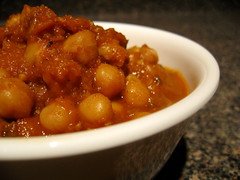
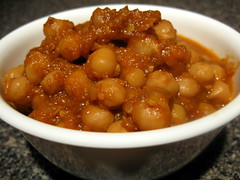
Indian Style Chick Peas

Thanks to Stuti Jhunjhunwala for teaching me how to make this staple Indian food!  Stuti has such a simple method for cooking this recipe, and its packed with tons of flavor! 

For anyone trying to learn some basic Indian recipes, I'd say this is a pretty good one to start with.  It doesn't require too many different ingredients and though it takes some time, the method is straightforward.  All you aspiring Indian chefs - be brave and give this recipe a try!

This recipe can be served with some sort of Indian bread (chapati, naan, paratha, puris, baturas etc.) or rice.  I like to scoop up the chick peas with a chapati instead of eating them with rice.  But that's of course, my personal opinion!

Indian Style Chick Peas
Makes approximately 8 servings as part of a meal

Ingredients
2 and 1/4 cups of dried chick peas, washed and soaked for 24hrs in water OR 3 15oz/425g cans of chick peas, drained and rinsed
1 tsp turmeric
1 tsp salt
1-2 tbsp canola or vegetable oil
1 tbsp cumin seeds
1 large onion
3 birds eye chilis (or some other medium hot chili, like a serrano pepper to taste)
6 cloves of garlic
2 tbsp grated ginger
3/4 can tomato paste (about 4.5oz)
2 tbsp MDH chana masala mix (available at most Indian supermarkets)
1/2 lemon or lime (optional)
More salt to taste

Directions
  1. After soaking the chick peas, cook them until tender with turmeric and salt (a pressure cooker is the fastest method if you have a pressure cooker that is safe for beans, or they can be simmered for 1-2hrs), OR, place drained and rinsed canned chick peas in a bowl with turmeric and salt. 
  2. Place onions, chilis and garlic into a chopper and process until they are very finely chopped.  If you don't have a chopper, use a large chef's knife to get to a finely chopped consistency.  
  3. Heat oil in a large non-stick pan.  Add cumin seeds and allow them to brown for a minute (they should sizzle a little and be fragrant).    

  1. Add the onions, chilis, garlic and ginger.  Allow them to cook until they are starting to brown and stick to the bottom of the pan (approximately 10-15 minutes on medium heat).  

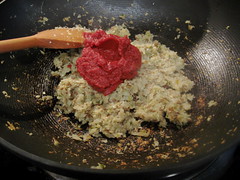
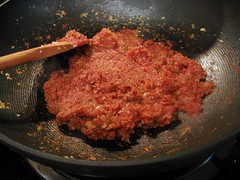
  1. Add the tomato paste.  Continually stir for approximately 3-4 minutes. 

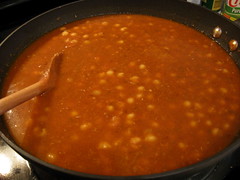
  1. Add the chick peas and the water they were cooked in, and the chana masala mix and stir well.  If you are using canned chick peas instead, add 2 cups of water to the pan.   

  1.  Simmer for approximately 30-45 minutes, until the sauce is nice and thick.  Adjust the spiciness with the lime or lemon juice, and adjust the salt according to taste.  


Thursday, March 15, 2012

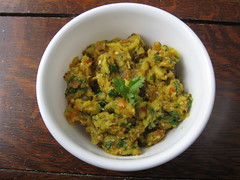
Shortcut Baingan Bharta (Indian Style Mashed Eggplant)

Thanks to my dad's patience and experimenting, he's come up with a way to make really good baingan bharta without all the fuss and effort usually required.  The only thing that is missing from this shortcut version is the smokey flavor that comes with roasting the eggplant over a flame, but to be honest, I actually like this version better because I think you can really taste all the delicious fresh ingredients that you can't in it's original form.

Baingan Bharta
Serves 3 people as a meal accompaniment 


Ingredients
1 eggplant
1/2 small onion, finely chopped
1 plum tomato, chopped
1 large handful of cilantro leaves, chopped
1 tbsp canola oil
1 tsp crushed garlic
1 tsp grated/ground ginger
3/4 tsp black mustard seeds
1 pinch hing (asafoetida) 
1/2 tsp cayenne powder (or more to desired spice level)
1/4 tsp turmeric
1/2 tsp cumin powder
1/2 tsp coriander powder
salt to taste

Directions
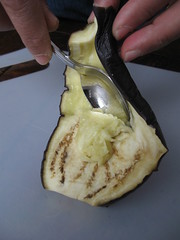
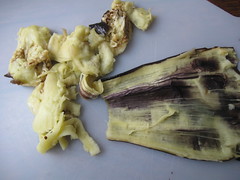
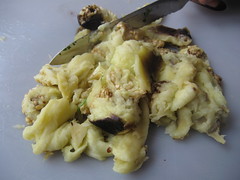
1.  Wash eggplant, cut into 2 or 4 pieces.  Place in microwave safe container with a few teaspoons of water and a lid.  Microwave until cooked, for approximately 12 minutes (more or less time depending on the strength of your microwave).  Remove the eggplant from the cooking container, allow to cool, and then peel.  Discard the skin.  Chop/crush the eggplant flesh and set aside. 

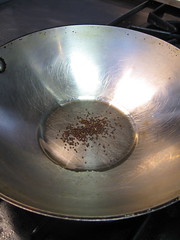
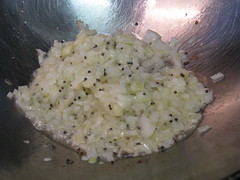
2. In a non-stick pan, heat canola oil.  Add mustard seeds and wait until they start to sizzle and pop.  Then add the pinch of hing, followed by the onions.

3.  Saute the onions until soft.  Then add the garlic, ginger, and all of the remaining spices.  Stir for a minute or two to avoid burning.

4.  Add the tomatoes.  Allow to cook for a couple of minutes until they start to break down.

5.  Add the eggplant and make sure to combine all the ingredients together well.

6.  Add the cilantro.  Turn off the heat.  Stir the cilantro in well, and serve hot.  


Friday, December 23, 2011

10 Minute Spicy Indian Peas


This is a simple, quick and tasty accompaniment to any meal. Adjust this recipe to be less spicy - just reduce the amount of red chili flakes.

10 Minute Indian Spicy Peas
Makes 4 Side Servings

Ingredients
1lb bag frozen petit pois
1 large yellow onion chopped
1 tbsp canola/vegetable oil
1/2 tsp black mustard seeds
2 tsp red chili flakes
1/2 tsp salt (more to taste if required)

Directions
1. Heat canola oil in a non-stick pan
2. Add mustard seeds and wait until they start to pop; when they start to pop, add onions, and salt

3. Cook onions, stirring occasionally until onions are slightly brown
4. Add chili flakes and cook for an additional minute or two (do not let onions burn)

5. Add peas, and stir until completely warmed through

Sunday, December 20, 2009

Kanda Pohe (Poha) - A Vegetarian Indian Snack Made of Flattened Rice


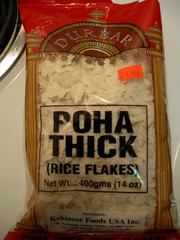
Pohe (in Marathi), or Poha (in Hindi) means flattened rice. It's prepared in many different ways. I am going to show you a simple preparation from the Indian state of Maharashtra, which is where my family comes from.

Though it's a really simple dish to make, growing up I always thought of pohe as a special treat. It brings back a lot of good memories to say the least because it was often eaten when the family got together.

A carbohydrate heavy dish, there aren't many people who won't like this one!

Kanda Pohe
Makes 4 snack sized servings, or serves 2 as a meal

Ingredients
300 grams of poha
2 medium sized potatoes, cut into cubes
1 small onion, choppped
2 tablespoons canola oil
1 teaspoon black mustard seeds
1/2 teaspoon turmeric powder
1/2 teaspoon cayenne pepper (or 1 green bird's eye chilli, finely chopped)
1-2 teaspoon salt
1 heaping tablespoon of sugar
1 large handful of cilantro, washed, leaves removed from stalks and chopped
Optional - freshly grated coconut

Method


1. Chop the onion and potato.
2. Heat the oil in a large non-stick pan.


3. Add the mustard seeds, and wait until they start talking (until they start popping).


4. Add the onion and fresh green chili if that's what is being used.
5. Cook on a medium heat for three to four minutes, until onion starts to soften.


6. Add potatoes and cover pan to help soften potatoes more quickly, stir occasionally.


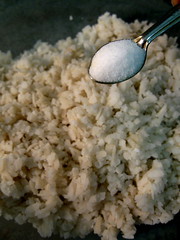
7. In a strainer, add poha, and run water over until well soaked; allow to drain.


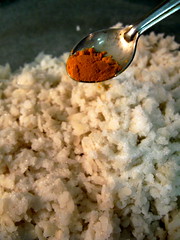
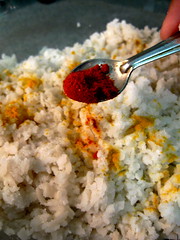
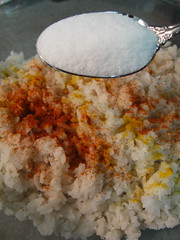
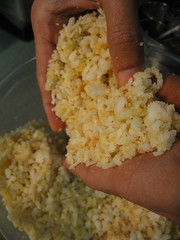
8. Place poha in a bowl. Add turmeric, chili (unless you used fresh green chili), sugar and salt.


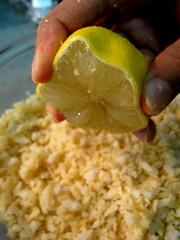
9. Mix well, add lemon juice, and set aside.


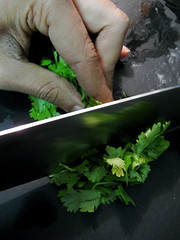
10. Chop cilantro. Set aside. If you have fresh coconut, this would also be the time to grate it.


11. When potatoes are softened, remove lid and allow potatoes to brown until golden.


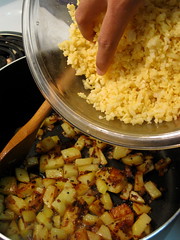
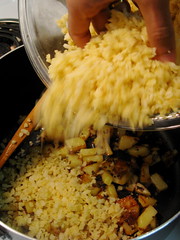
12. Add poha mixture to pan, and stir gently on a low heat until mixture becomes more yellow and slightly drier. This will take a few minutes.


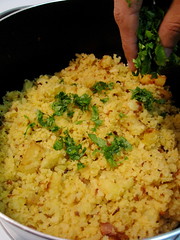
13. Stir in cilantro, and remove pan from heat. Garnish with grated coconut.


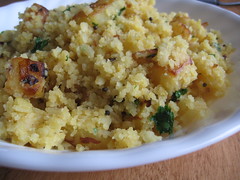
14. Enjoy hot and fresh. The poha flakes become hard after some time if they become cold.